The videos weren't bad. The hook said what the video was about. The audio was clean. The chapters made sense. Yet 80% of viewers were gone inside the first 40 seconds, and average view duration sat at 1:58 on a 14-minute video.
This is the most common thing we see when a new client sends over their channel: not a production problem, but a retention problem. And on YouTube, retention is the ranking signal that actually moves.
The diagnosis
- Hooks were summaries, not questions — they told viewers the topic, not why to stay.
- The first two minutes were background and context, delivered before the value.
- Long sections with the camera static and no b-roll or visual change.
- CTAs were crammed into the last 30 seconds, after most viewers had already left.
- Titles and thumbnails promised one thing; the opening delivered another.
None of this is a talent problem. The client is a strong communicator with genuinely useful material. It was a structure problem — and structure is exactly what an edit can fix.
What we changed
- 1Rewrote the first 15 seconds around the sharpest claim in the video, cut against the strongest visual.
- 2Moved the payoff — the single most valuable takeaway — into the first 90 seconds.
- 3Re-cut the first three minutes to be the 'results, then the why' instead of the reverse.
- 4Inserted visual changes every 4–6 seconds: b-roll, pull quotes, zooms, screen recordings.
- 5Restructured the CTA into a natural pause 70% of the way through, with a reminder at the end.
- 6Aligned every title and thumbnail with the specific, high-stakes claim the video delivered.
The results
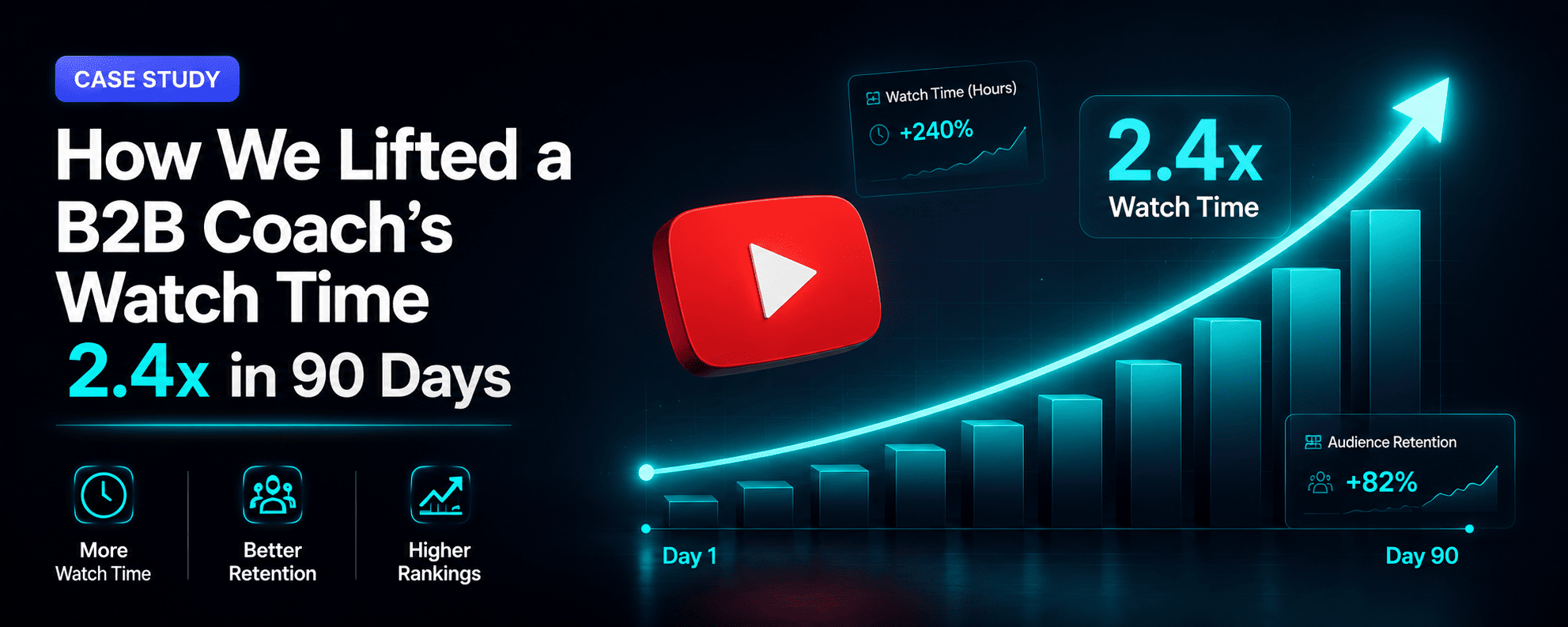
Within 90 days, average view duration climbed from 1:58 to 4:41 on a 14-minute video. Watch time per upload roughly 2.4x'ed, and — more importantly for a B2B channel — the client went from 2 to 6 qualified calls booked per month directly from YouTube.
Watch time compounds. A video that keeps viewers for 5 minutes gets suggested more, which brings more viewers, which feeds the same loop. Fixing retention is the highest-leverage SEO move available to a talking-head channel.
The production quality was never the issue. The issue was that the edit treated YouTube as a place to publish, not a place to hold attention. When you edit with the retention curve in mind, the algorithm stops being a mystery.